 ResumeFinch
Campus resume template
Education first, career-office style
No work experience
A resume with no work experience is built from what you have done rather than jobs you have held: a degree, volunteering, campus roles, projects, caring for family and certificates. Write each of those up the way you would write a job, with a title, dates and specific bullets, and put your strongest evidence near the top.
This page is for adults looking for a first job, or a first job in years: recent graduates, people returning after caregiving, and career changers whose relevant experience is unpaid. Still in college? The student resume template is written for that. Applying for one internship posting? Use the internship resume template.
Free to build and preview. Downloads are a one-time payment, no subscription.
The sample above belongs to Jalen Whitaker, a fictional communication graduate applying for front desk and office support jobs. He has never held a paid job. Here is how his page is put together and why. The numbers in his bullets, and in every example on this page, are placeholders for your own.
In the builder, click a section heading to rename it, drag Education above Experience, and add Projects or Volunteer Work from the custom section presets. Keeping volunteer roles inside the renamed Experience section also satisfies the strength score's experience checks, which look for at least one entry with a title and an organization.
A skill listed on its own is a claim. The same skill backed by a line elsewhere on the page is evidence. These 12 suit most entry-level jobs; the middle column shows where people without a work history usually pick them up, and the last column shows the kind of line that proves each one.
| Skill | Where you may have built it | Evidence to cite |
|---|---|---|
| Customer service | Volunteer front desk, event check-in, hospitality at a church or club | Greeted and checked in about 80 visitors per shift |
| Cash handling | Club treasurer, fundraisers, a family business | Counted and deposited $1,200 in bake sale cash with a second person signing off |
| Scheduling | Volunteer rosters, managing a relative's care | Kept a shared calendar of 12 medical appointments a month for a parent |
| Written communication | Coursework, newsletters, scholarship or grant applications | Wrote a monthly email update read by 200 members |
| Spreadsheets (Excel or Google Sheets) | Club budgets, class projects, household planning | Built a budget sheet that totals spending by category with SUMIF |
| Data entry | Intake forms, sign-up lists, donation logs | Entered 150 intake forms a month into the pantry's database |
| Training others | Tutoring, onboarding new volunteers, coaching a youth team | Trained 10 new volunteers on check-in and privacy rules |
| Presenting | Class presentations, capstone panels, club meetings | Presented capstone findings to 4 faculty and the partner organization |
| Inventory and stock rotation | Food banks, thrift stores, supply drives | Rotated and dated donated stock so the oldest items went out first |
| A second language | Home, study abroad, volunteering with clients | Answered client questions in Spanish at weekly intake |
| Reliability | Any commitment you kept for a long stretch | Covered 40 Saturday shifts in a row over one year |
| First aid and CPR | A certification course | Adult First Aid/CPR/AED, American Red Cross, with the year earned |
Leave out traits nobody can check, such as 'hard worker' or 'fast learner'. When a skill matters for the job and you have nothing to prove it yet, a short course with a certificate is the quickest fix: the ServSafe Food Handler course from the National Restaurant Association for restaurant work, for example, or a Google Career Certificate for IT support.
A 2026 graduate of an associate program in health information technology, aiming for a medical records clerk job. The program's practicum is the closest thing she has to a job, so it is written as one and placed straight after education.
Someone who spent six years caring for a parent at home and now wants an office or care job. Those years are the experience. One honest entry with dates reads far better than a six-year hole the reader has to guess about.
If the caregiving points you toward healthcare, the CNA resume example shows how training hours and clinical skills are written up for a first nursing assistant job.
A warehouse worker who has spent four years running registration and fundraising for a youth soccer league, and now wants a nonprofit program coordinator job. The paid job stays on the page, but the volunteer work is the evidence for the new field, so it goes first.
The restaurant server example applies the same idea to a first serving job, with hosting, catering and a food handler card standing in for serving experience.
Yes. Give it a title, the organization and dates, in the Experience section or one renamed for it. Make it plain that the role was unpaid, through the title ('Volunteer Intake Lead') or the heading, so nobody is misled.
As one entry: a plain title such as 'Family Caregiver', a short description like 'home care for a parent', and the years. Add two or three bullets only if the work relates to the job you want, such as scheduling, medications or handling insurance.
Yes, if it was regular and you can describe it with specifics. Write it like any job ('Childcare Provider, private family, 2023 to 2025') and say what you were trusted with: the number of children, school pickups, cash, opening the shop.
Either works. An objective names the job you want and suits you when nothing else on the page makes that obvious. A summary leads with your best evidence. The objective examples guide has wording for both situations.
A half page of real evidence is fine. Before padding it, check for things you left off: a certificate, a class project, a long-running volunteer role. Linen's Airy spacing also fills the page out without adding words.
Start with Linen. You can switch templates anytime.
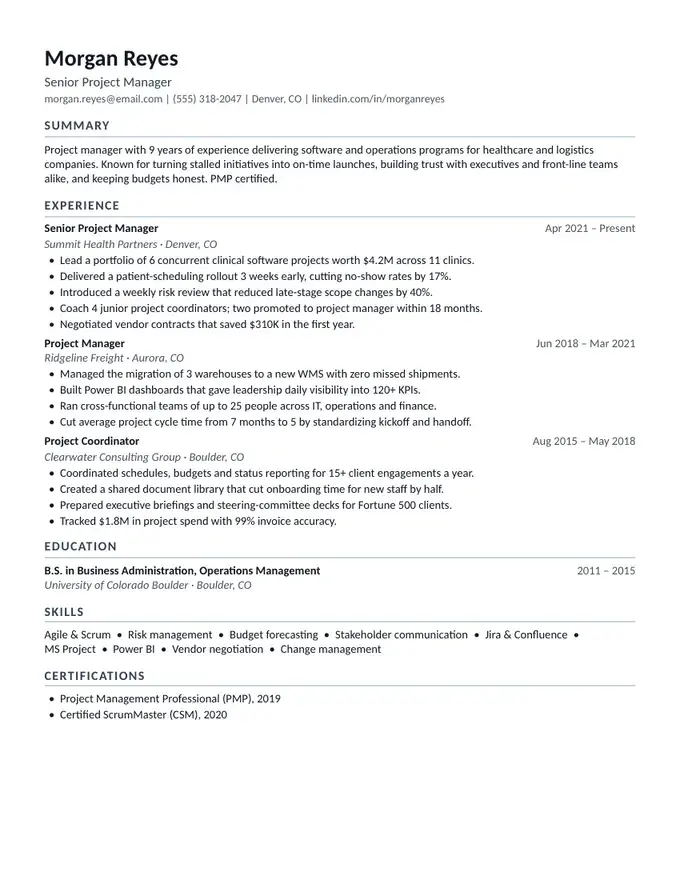
Education first, career-office style
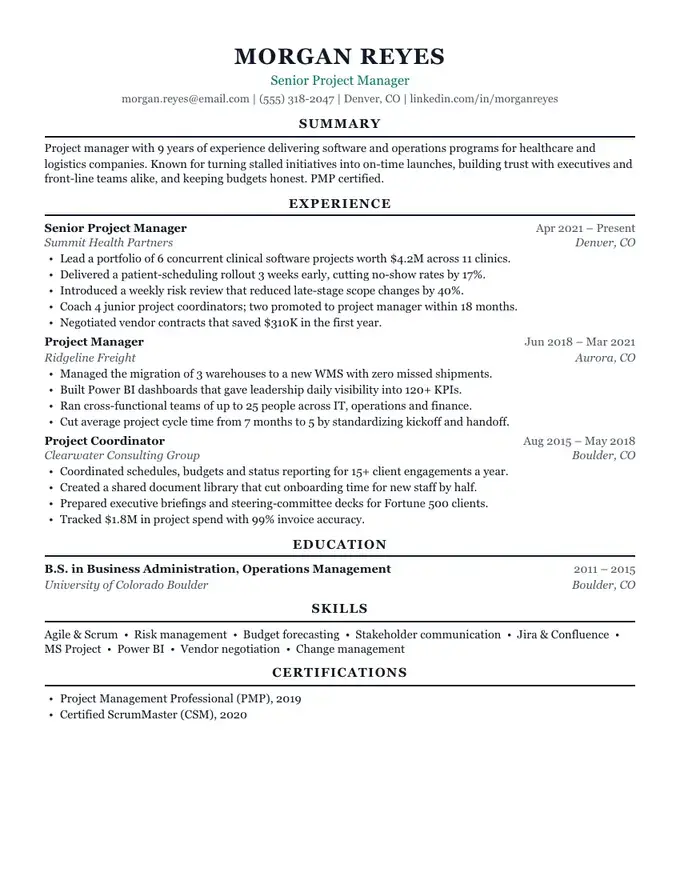
Simple and compact
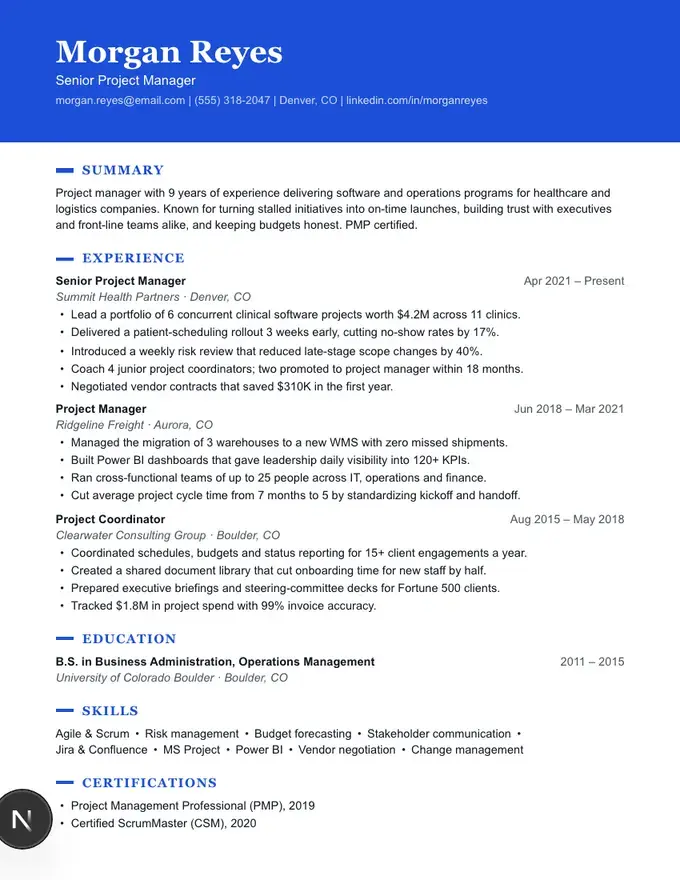
Color header, one column
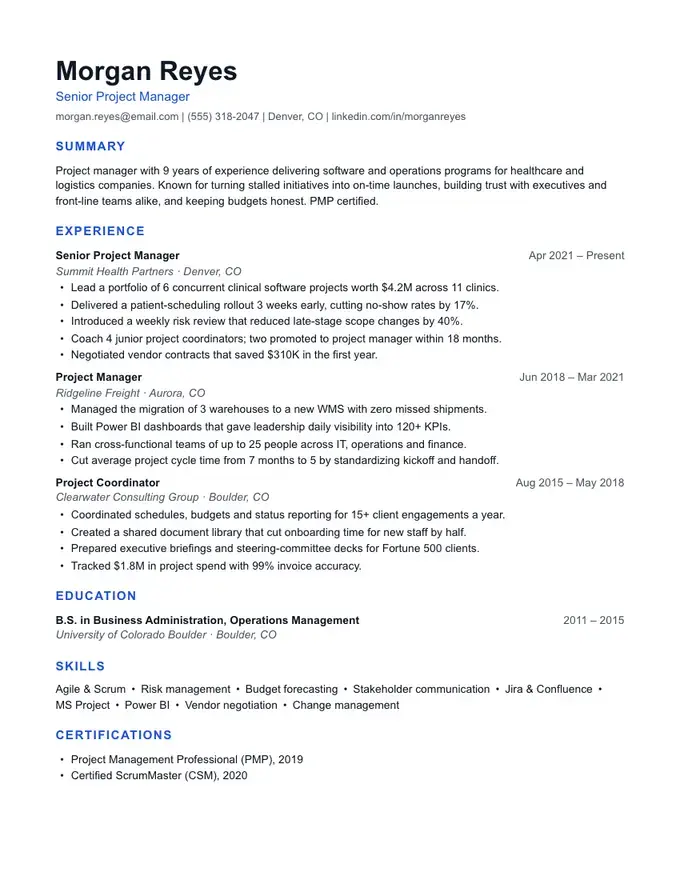
Modern with a blue accent