 ResumeFinch
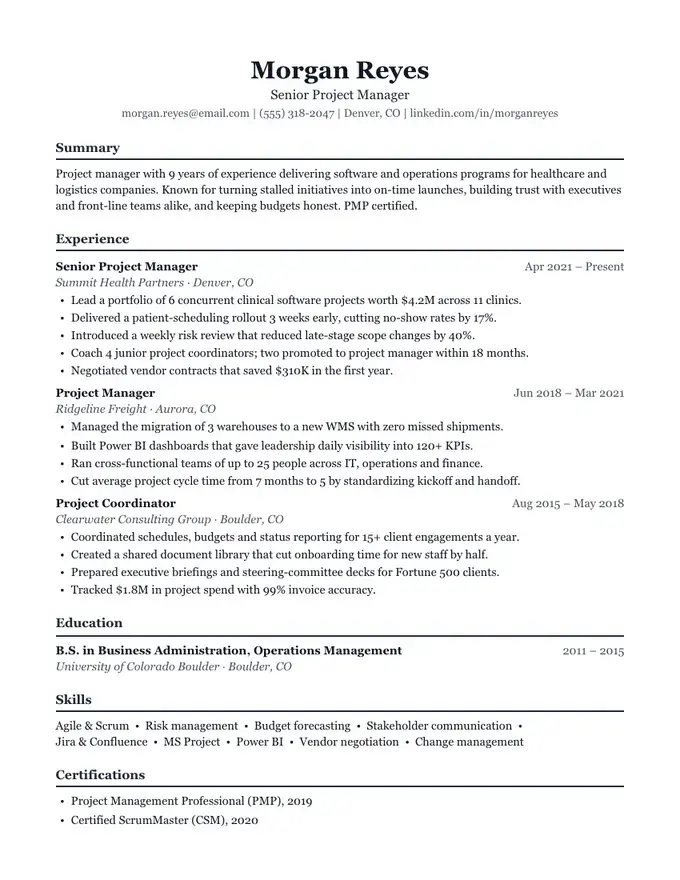
Harbor resume template
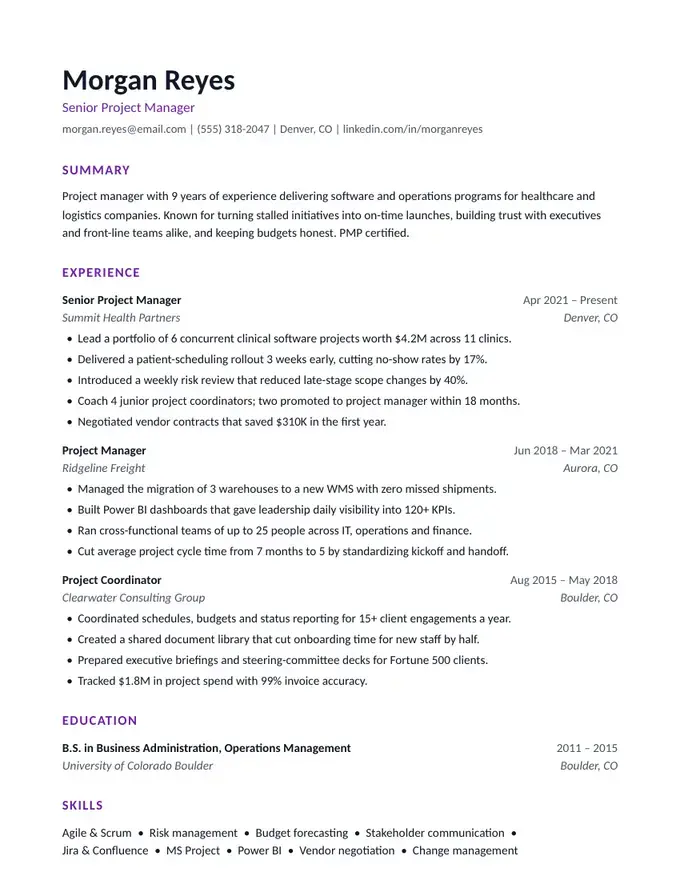
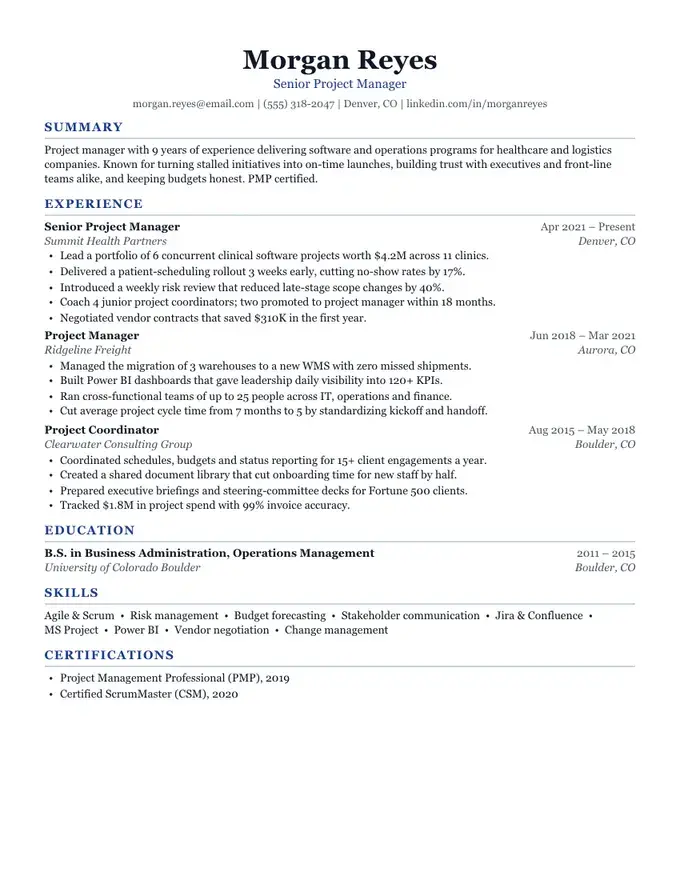
Classic and centered
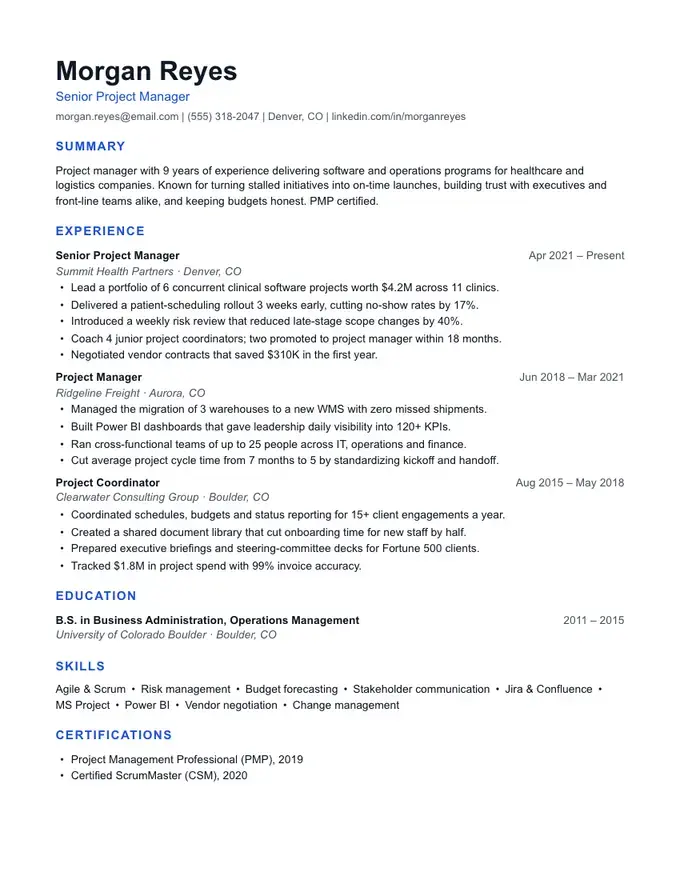
Simple and basic
A simple resume template uses one column, four sections (summary, experience, education, skills) and plain headings, in the order a reader expects. It suits almost any job, and because there is so little to decide, you can fill one in quickly and spend your effort on the words.
Slate is the template here. It sets Calibri throughout at 10 pt with Compact spacing and 0.56 in margins, so a full work history fits on one page. "Basic resume template" and "plain resume template" mean the same thing as simple: the familiar format with nothing extra.
Free to build and preview. Downloads are a one-time payment, no subscription.
The preview shows Corinne Abernathy, a fictional service coordinator at a heating and air conditioning company. Her figures are placeholders. What makes her resume simple is mostly what she chose not to add.
If you know your dates and job titles, a first version takes about a quarter of an hour. Do the steps in this order so you never stop to rearrange anything.
Fifteen minutes gets you a correct resume. Tailoring it takes about five more minutes per application: swap two or three skills and one bullet so they match that posting.
These three get used as if they were the same thing. They describe different properties, and one resume can be all three at once.
| Aspect | Simple resume | Minimalist resume | One-page resume |
|---|---|---|---|
| What the word describes | Structure: the standard sections in the standard order | Design: quiet headings, no rules or color blocks, lots of white space | Length: everything fits on one sheet |
| Question it answers | Can a reader find everything where they expect it? | Does anything on the page distract from the words? | Did you keep only what matters for this job? |
| Typical sections | Summary, experience, education, skills | The same, kept to as few as possible | Whatever fits, cut hardest in older roles |
| Who it suits | Almost anyone, especially for online applications | People who want a calm, design-conscious look | Most people with under about 10 years of experience |
| Template and defaults here | Slate: Calibri throughout, Compact spacing (0.56 in margins) | Linen: Calibri throughout, Airy spacing (0.78 in margins) | Keystone: Georgia throughout, Compact spacing (0.56 in margins) |
Want the restrained look? The minimalist resume template page covers Linen in detail. Struggling to fit everything on one sheet? The one-page resume template page walks through cutting a long draft down step by step.
No. Both mean a one-column resume with the standard sections in the usual order and no graphics. Some people say basic when they mean plain-looking, but the layout is the same.
Slate uses the Contemporary pairing, Calibri throughout. The PDF embeds Carlito, an open font with the same letter widths as Calibri, so lines break the same way. You can switch to Classic, Clean or Editorial in the design panel.
A little. Slate's default accent is a dark slate gray, and the builder offers nine accent colors, all dark enough to read clearly on white when printed. Let the accent carry the color and keep the body text dark.
Yes. The structure scales: a director's simple resume has the same four sections, just more experience and a sharper summary. If you need two pages or a more formal look, Harbor and Summit keep the same order with more spacing.
Yes. 'Start from this example' opens her resume in the builder as a new resume, so nothing you have already saved is replaced. Type over her details with yours.
Start with Slate. You can switch templates anytime.
Classic and centered
Minimal and airy
Dense and technical
Modern with a blue accent