 ResumeFinch
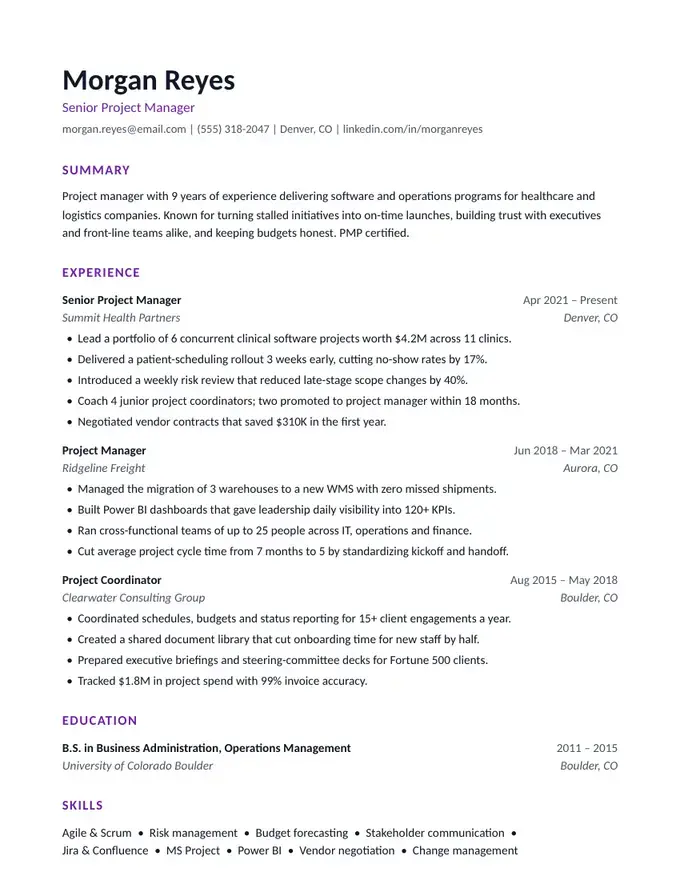
Linen resume template
Minimal and airy
Healthcare
A CNA resume example should open with your state certification and nurse aide registry status, then show how many residents or patients you cared for each shift and what you did for them: ADLs, vital signs, safe transfers and charting. The sample below is a certified nursing assistant in long-term care who started as a home health aide.
Nursing homes, hospitals, rehab centers and home health agencies all hire nursing assistants, and each reads the resume for something different, so the settings are covered further down. Every number in the example bullets is a placeholder for your own.
The example opens as a new resume you can edit. Free to build and preview; downloads are a one-time payment, no subscription.
The person and employers in this sample are fictional, and its numbers are placeholders to replace with your own.
ADLs fill most of a CNA shift, so be concrete: which ones, for how many residents, and how much help they needed.
Nurses count on the aide to notice change first. Bullets that show you measured, recorded and spoke up are the ones a charge nurse looks for.
Transfers are where residents and aides get hurt. Name the equipment you are trained on and the safety habits you keep.
Directors of nursing need aides who finish documentation, follow isolation rules and help on short-staffed shifts.
Memory care and long-stay residents need the same faces and routines, so patience and respect are skills worth proving with specifics.
| Credential | Issued by | Notes |
|---|---|---|
| Certified Nursing Assistant (CNA) certification | Your state, recorded on its nurse aide registry (run by the health department or board of nursing, depending on the state) | The title varies by state; Ohio, for example, uses State Tested Nursing Assistant (STNA). List the state, that you are active on the registry, and the renewal date. |
| Nurse aide competency exam | Your state or a testing vendor it contracts with; many states use the National Nurse Aide Assessment Program (NNAAP), developed by NCSBN | A written or oral test plus a hands-on skills test. Passing both puts you on the registry, so list the registry status rather than the exam once you are listed. |
| BLS Provider (CPR) | American Heart Association or American Red Cross | Many facilities require it. Write the expiration month. |
| Home Health Aide (HHA) training | A state-approved training program or home health agency | Federal rules for Medicare-certified home health agencies call for at least 75 hours of aide training, including 16 hours of supervised practical training, or a passed competency evaluation. Some states add their own requirements. |
| What is measured | How to phrase it |
|---|---|
| Residents or patients per shift | "Cared for 10 to 12 residents on day shift and up to 18 on nights in a 120-bed skilled nursing facility." Give the shift, because night counts run higher. |
| Pressure injuries on your assignment | "No new pressure injuries among bedbound residents on my hall over 8 months." |
| Falls | "Hall falls dropped from 7 to 3 a quarter after we added scheduled toileting rounds." Say which part of the routine you ran. |
| Attendance and shifts covered | "No unplanned absences in 12 months and 26 open shifts covered." Scheduling is a daily problem in long-term care, so this number gets read. |
| Charting completion | "Point-of-care ADL charting complete before shift end for 6 straight months." |
Newly certified nursing assistant, active on the state nurse aide registry, with BLS and supervised clinical training in a skilled nursing facility. Comfortable with ADLs, vital signs and gait belt transfers, and available for day or evening shifts in long-term care or rehab.
CNA with 5 years in long-term care and memory care, caring for 10 to 12 residents a shift. Trained on full-body and sit-to-stand lifts, charts in PointClickCare, and is the unit's go-to aide for residents with dementia.
Lead nursing assistant with 9 years across skilled nursing and a hospital medical unit. Orients new aides, runs the unit's turning and toileting schedule, and has hospital experience with EKG lead placement, bladder scans and Epic.
Nursing homes check the state registry before a new aide works a shift, so the certification line is the first thing a director of nursing or staffing coordinator looks for. Skills come before education because training programs are short and similar for most applicants, while the skills list shows the lifts, charting systems and care you can handle on day one.
The work is the same, but the title should match your credential. If you are certified and on the registry, write Certified Nursing Assistant or the title your state uses. If you worked as an uncertified nursing assistant or patient care assistant, as some hospitals allow, say so plainly and list your training instead.
Certification does not move automatically. Many states let an active aide in good standing transfer onto their registry by reciprocity, so check the new state's registry rules. Until the new listing posts, write the original state and "reciprocity application in process."
Pick the duties that filled most of your shift and attach a number and a setting to each. Three or four bullets per job covering ADLs, transfers, vital signs and reporting say more than twelve lines copied from the training manual.
Yes, while you look for your first CNA job. Put the program, the facility where you did clinicals and the hours under Education, and add a line about the residents you cared for under supervision. Remove it once you have about six months of paid work.
Name the one you used. Long-term care facilities often run PointClickCare or MatrixCare, and hospitals use their main EHR, such as Epic. If your last job charted on paper flowsheets, say that instead.
Open it in the builder, replace the details with your own and watch the page update as you type.
Minimal and airy
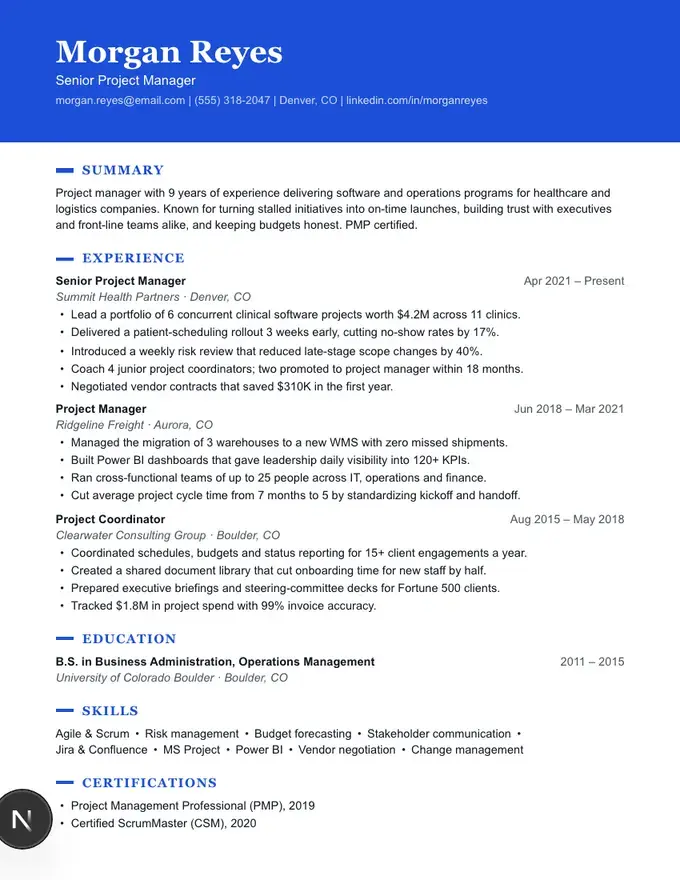
Color header, one column
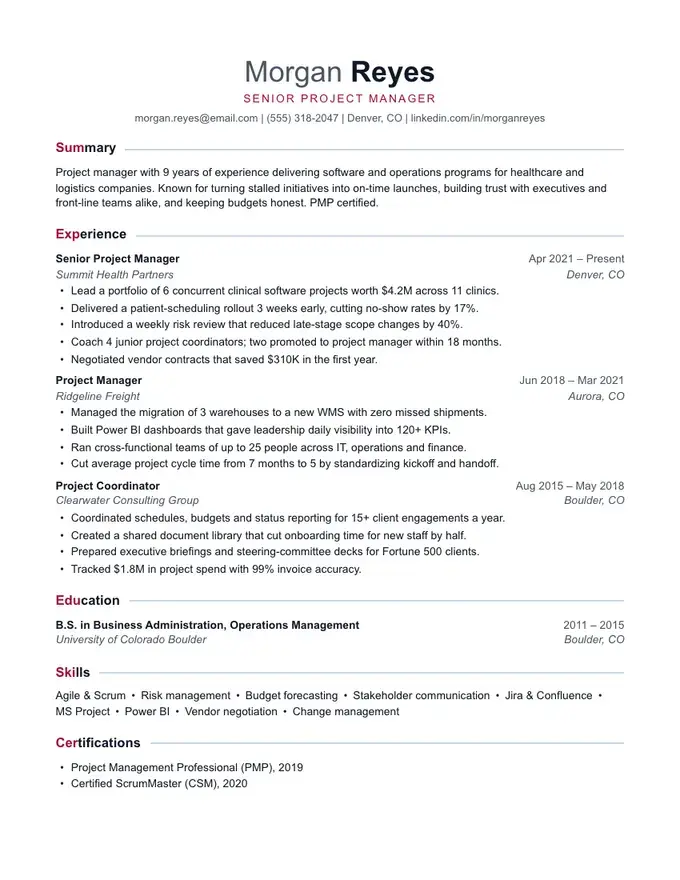
Polished with a confident accent